





 0
0
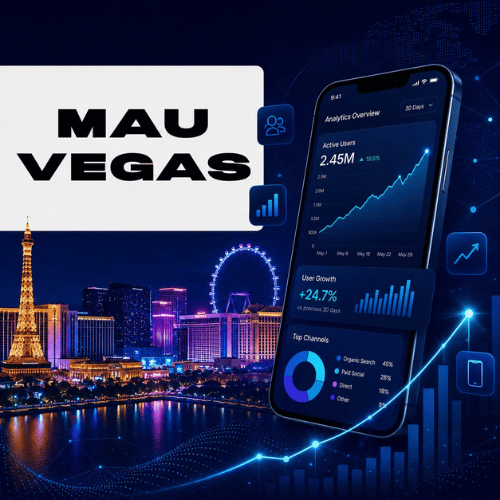
MAU Vegas Shows How Mobile Growth Has Become a Full-Stack Discipline
For years, MAU had a simple meaning in mobile: monthly active users. It was one of the clearest ways to measure whether an app had an active audience.
But the mobile growth industry has moved far beyond a single engagement metric. Today, growth teams do not just ask how many users opened an app this month. They ask harder questions: Who came back? Who converted? Which users have long-term value? Which channels drove real revenue? Which product choices improved retention? Which monetization model can scale without damaging the user experience?
That shift is one reason MAU Vegas remains an important signal for the app growth market.
The event brings together mobile marketers, growth leaders, product teams, founders, app publishers, data teams, creative leaders, lifecycle marketers, and solution providers. Its 2026 event is scheduled for May 19–21 in Las Vegas, with MAU positioning itself as a gathering for mobile teams focused on growth, discovery, learning, and connection. The official site highlights thousands of attendees, 100+ speakers, and 100+ curated experiences.
That scale matters, but the more important story is what the event now represents.
Mobile growth is no longer only about user acquisition. It is becoming a full-stack discipline.
MAU Is Bigger Than UA Now
In the Mobile Groove podcast hosted by Peggy Anne Salz, Angela Harar of MAU Vegas discusses how the event has evolved beyond its early association with user acquisition. That matters because it reflects a larger shift across the app economy.
User acquisition is still important. No app grows without demand. But acquisition alone does not create a durable business. A team can buy installs and still lose money if users do not activate, retain, subscribe, purchase, or engage in a meaningful way.
That is why the modern mobile growth conversation now includes product, monetization, lifecycle, data, creative, AI, and community. Growth teams need to understand the entire user journey, not just the ad click.
The MAU Vegas site reflects this same change. It says the event attracts people across performance, product, creative, data, brand, lifecycle, and engineering. That list is important. It shows that mobile growth now sits across multiple functions, not just one department.
For app companies, that creates both pressure and opportunity.
The pressure is clear: teams can no longer work in silos. Paid media cannot operate without product insight. Product cannot ignore monetization. Monetization cannot ignore retention. Creative cannot ignore data. Leadership cannot judge performance only by surface-level metrics.
The opportunity is also clear: when these teams work together, growth becomes more disciplined, more measurable, and more durable.
The Event App Reflects the Product Mindset
One of the more practical details from MAU Vegas is its own use of mobile technology.
The official MAU Vegas mobile app lets attendees view the agenda, connect with other attendees, plan their time onsite, navigate maps, and explore sponsors. MAU describes the app as the tool for setting up meetings and making valuable connections.
That detail may sound small, but it reinforces a larger point: even events now depend on mobile product strategy.
The attendee experience is no longer limited to what happens on a stage or at a booth. It starts before the event, inside the app. People plan meetings, review sessions, discover sponsors, manage time, and build their own event path.
For sponsors, that changes the value of an event. Visibility is not only physical. It becomes digital, searchable, and tied to attendee intent.
For attendees, the app creates a more personalized experience. Instead of walking into a large event and hoping to meet the right people, they can use the platform to make the event more targeted.
That is the same direction many consumer and business apps are moving: more personalization, better discovery, clearer navigation, and more useful engagement.
What Mobile Leaders Should Take From MAU
The lesson from MAU Vegas is not that every company needs to chase the same playbook. The lesson is that mobile growth now requires a more connected operating model.
Teams need better collaboration between marketing, product, data, lifecycle, monetization, and leadership. They need metrics that show real value, not just activity. They need tools that help them understand behavior across the full funnel. They need live feedback from the market, not assumptions made in isolation.
Most of all, they need to stop treating growth as a campaign function.
Growth is now a business system.
MAU Vegas reflects that shift because it brings together the people and companies working across that system. For mobile leaders, the takeaway is clear: monthly active users still matter, but MAU alone cannot explain whether an app is truly growing.
The future of app performance will be judged by the quality of engagement, the strength of retention, the discipline of monetization, and the ability to connect product value with business outcomes.
That is where mobile growth is becoming more mature. And that is the conversation more leaders need to have.
Sources
- MAU Vegas official website — event overview, audience, speakers, curated experiences, and positioning.
- Mobile Groove podcast with Peggy Anne Salz featuring Angela Harar of MAU Vegas — discussion of MAU’s evolution beyond user acquisition and the broader mobile growth ecosystem.


