





 0
0

Mobile growth has become harder to read.
For years, app marketers could build a case around visible signals: impressions, clicks, installs, conversions, and cost efficiency. Those numbers are still useful, but they no longer tell the whole story. A user might discover a product on connected TV, research it online, install the app later, and complete the most valuable action on a mobile device. Attribution systems may give credit to one moment, even though the final business outcome depends on several.
That fragmentation is the problem Yaron Tomchin is trying to address.
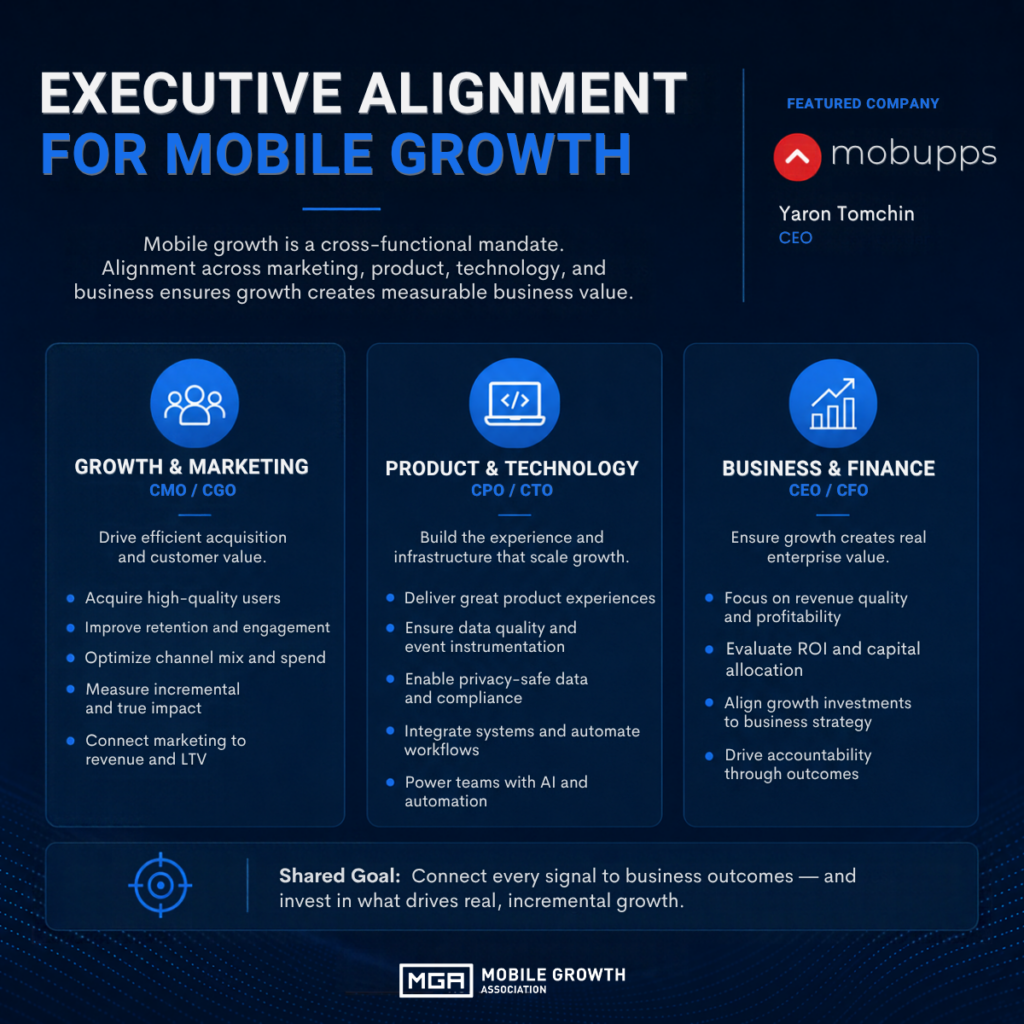
As CEO of Mobupps, Tomchin works in a market where mobile growth now stretches far beyond mobile apps. Apps, websites, CTV, OEM inventory, programmatic media, data platforms, privacy rules, and AI all play a role in the same growth ecosystem. The challenge for executives is not just finding more traffic. It is connecting the signals across these channels and understanding which efforts are actually creating value.
One of Tomchin’s clearest guiding principles is that volume is not the same as growth. More installs, impressions, and reach can make a campaign appear healthy, but they do not always prove that a campaign produced a new user, a better customer, or a stronger business outcome. That belief helps explain why he focuses on connected systems, proprietary infrastructure, and outcome-based measurement.
His career reflects that change. Tomchin has described his path into ad tech as a blend of data and marketing, two disciplines that have become increasingly difficult to separate. The more fragmented the customer journey becomes, the more growth leaders need systems that can translate activity into decisions. That belief appears to have shaped how Mobupps has built its technology stack.
The company presents MAFO, MobuppsX, iRTB, and ECHO AI as parts of a broader infrastructure layer spanning acquisition, reporting, bidding, monetization, automation, and decision support. These products demonstrate how Tomchin approaches the problem: he sees the Mobupps product suite as a way to reduce dependency on disconnected tools and shorten the distance between signal, analysis, and action.
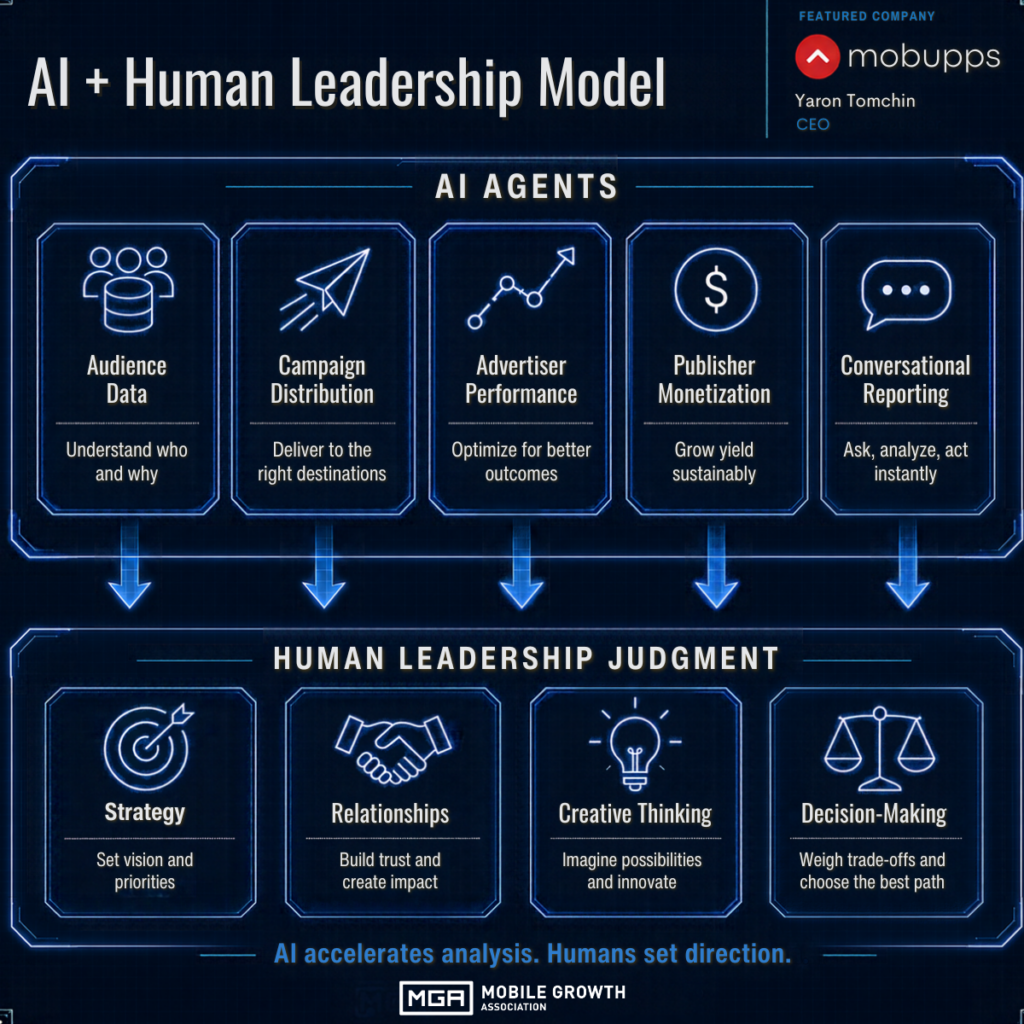
Speed alone is not enough. In a market shaped by privacy changes, signal loss, platform policy shifts, and uncertain attribution, teams can have more dashboards and still struggle to understand what is actually working. The ECHO AI discussion on a recent Mobupps Insider podcast, with host Siddharth Barman, helps put this challenge into context. Tomchin describes a market where marketers are dealing with fragmented information, slow decision-making, and uncertainty about which traffic is creating real value. He presents ECHO AI as part of Mobupps’ internal technology approach, with agents focused on audience data, campaign distribution, advertiser performance, publisher monetization, and conversational reporting.
That example offers a useful window into how Tomchin thinks about running the business. His view of AI is also more grounded than many executive narratives around the technology. He does not frame people as being replaced by machines. He sees AI as a way to take repetitive execution work off teams’ plates so they can focus on strategy, relationships, creative thinking, and decision-making. In that model, AI provides speed, while leaders still provide direction.
The ID Finance partnership offers a practical example of the type of outcome-oriented thinking Tomchin emphasizes. The reported framework connects impressions and clicks to installs, loan requests, and approved loans, then uses those later-stage outcomes to guide budget decisions. It should not be read as proof of incrementality by itself, and it does not replace controlled testing. It does show the direction of the argument: mobile growth needs to move beyond surface-level activity and follow performance far enough down the funnel to reach outcomes the business can recognize.
That is the central theme of Tomchin’s executive profile. His work is not best understood as a bet on one channel, one product, or one technology trend. It is an effort to bring a fragmented system into greater alignment. Data gives teams continuity. Measurement provides discipline. Infrastructure creates control. AI adds speed. Human judgment gives those systems direction.
For senior mobile growth leaders, the implications are significant. The next phase of growth will require more than campaign execution. It will call for leaders who understand how signals move across channels, how measurement guides investment, and how automation is redefining the role of human teams.
Tomchin’s position in that conversation comes from the problem he is choosing to work on: how to help marketers connect fragmented systems, make faster decisions, and stay focused on business value.
On Thursday, Mobile Growth Association will publish the full executive interview with Yaron Tomchin. In that conversation, we explore his blueprint for the next era of mobile growth, including incrementality, cross-device measurement, AI-driven optimization, and the leadership discipline required to build through constant market change.


